
INSTITUTE FOR STANDARD AND QUALITY DEVELOPMENT STUDIES


21/11/2025
The oil and gas industry is one of the sectors with the most complex and high-risk supply chains — where every link, from exploration and transportation to processing, can directly impact safety, environmental protection, and business performance.
In the context of globalization and increasingly stringent quality requirements, establishing a management system capable of controlling risks and maintaining supply chain stability has become a critical factor for survival.
ISO 29001 was developed as a specialized international standard for the petroleum, petrochemical, and natural gas industries, helping enterprises standardize processes and manage risks across the entire value chain.
Let ISSQ Institute for Standard and Quality Development Studies explore how ISO 29001 helps oil and gas enterprises effectively control risks and achieve sustainable development in the global competitive environment.
ISO 29001 is an international quality management system standard specifically designed for the petroleum, petrochemical, and natural gas industries. It aims to control risks and ensure consistency throughout the supply chain.
The standard specifies requirements for organizations providing products and services in the oil and gas sector — including manufacturers of materials and equipment, technical service providers, as well as procurement, operation, and maintenance units.
In short, ISO 29001 is a powerful tool that helps oil and gas enterprises establish, maintain, and continually improve their quality management systems, minimize errors, prevent risks, and enhance reliability across the supply chain.
In the oil and gas sector, supply chains extend across multiple stages — from design and equipment manufacturing to transportation, maintenance, and operations. Each stage contains potential risks affecting quality, safety, and environmental performance.
ISO 29001 helps organizations identify, assess, and control these risks systematically based on risk-based thinking and the PDCA (Plan – Do – Check – Act) cycle.
ISO 29001 requires enterprises to clearly identify risk factors that may affect product and service quality — from raw material sources and design processes to manufacturing, delivery, and operation.
Based on this, organizations analyze impact levels and determine appropriate control measures to ensure key processes are monitored and errors are prevented.
One of the core aspects of ISO 29001 is controlling externally provided processes, products, and services.
Organizations are required to:
Evaluate and select suppliers based on capability, compliance level, and potential risks.
Monitor supplier performance through quality indicators, delivery schedules, and customer feedback.
Establish clear inspection and acceptance criteria to ensure materials and equipment meet technical requirements before use.
ISO 29001 requires that any changes related to design, processes, equipment, or suppliers must be risk-assessed and approved before implementation.
This helps organizations prevent technical deviations and ensure products and services continue to meet quality requirements even when operational adjustments occur.
The standard requires organizations to develop response plans for supply chain disruptions, such as equipment failures, delays, safety incidents, or natural disasters.
These plans must clearly define roles, responsibilities, communication methods, and corrective actions to ensure rapid recovery and minimize losses.
ISO 29001 goes beyond risk control by requiring organizations to monitor the effectiveness of risk management measures through:
Periodic internal audits
Measurement of supply chain performance (quality, delivery, safety, customer complaints)
Root cause analysis and process improvement based on actual data
As a result, management systems remain updated, adaptive, and continuously improved — enabling supply chains to operate more safely, efficiently, and reliably.
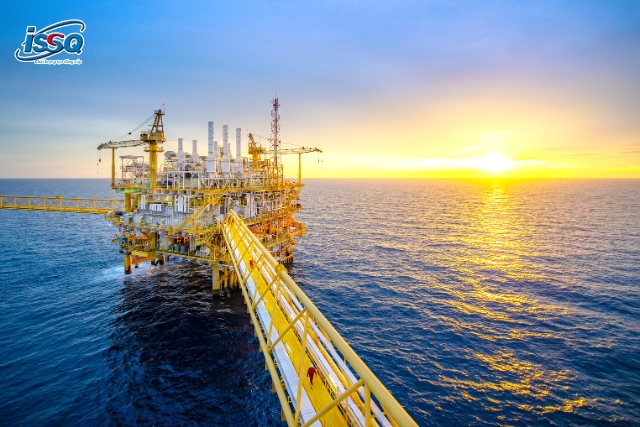
Therefore, ISO 29001 is not only a quality standard but also a comprehensive risk management framework for the oil and gas industry — helping enterprises proactively prevent incidents, optimize performance, and enhance reputation in the global market.
In a highly demanding industry such as oil and gas, supply chain risk control is not only a technical task but also a key criterion for ensuring safety, quality, and corporate credibility.
ISO 29001 provides a comprehensive quality management framework that enables organizations to proactively identify, prevent, and respond to risks at every stage — from design and production to operations. Implementing this standard not only reduces errors and optimizes costs but also builds strong trust with customers and international partners.
Partner with ISSQ Institute for Standard and Quality Development Studies in building ISO 29001 management systems — so your enterprise can operate safely, efficiently, and sustainably in the global competitive environment.
Organizations interested in ISO 29001 certification — Quality Management System for the petroleum, petrochemical, and natural gas industries — please contact ISSQ via hotline (+84) 981851111 or email vienchatluong@issq.org.vn | tcvn@issq.org.vn for procedural support.
Published date: November 21, 2025


