
INSTITUTE FOR STANDARD AND QUALITY DEVELOPMENT STUDIES


21/11/2025
As organizations increasingly focus on sustainable development, building a structured environmental management system has become a critical step toward enhancing reputation and meeting market expectations.
ISO 14001 is widely recognized as a foundational standard that enables organizations to systematically manage environmental impacts while providing a basis for advancing toward a comprehensive ESG (Environmental – Social – Governance) model.
Let ISSQ explore how ISO 14001 supports organizations in establishing effective ESG management systems aligned with current sustainable development trends.
ISO 14001 is an international standard that specifies requirements for an environmental management system, helping organizations identify, control, and improve their environmental impacts throughout operational processes.
The standard focuses on core elements such as environmental risk management, efficient resource utilization, pollution reduction, and continual improvement.
The connection between ISO 14001 and the ESG model lies in its ability to provide a clear framework for evaluating, monitoring, and improving environmental performance. This directly addresses the “E – Environmental” component while also enhancing corporate accountability, transparency, and sustainable governance.
As a result, ISO 14001 becomes a key foundation for organizations to develop ESG systems based on data, structured methodologies, and long-term development objectives.

Although ISO 14001 primarily focuses on environmental management, its value extends beyond the environmental dimension and contributes to shaping the overall ESG framework.
With a risk-based, data-driven, and continual improvement approach, ISO 14001 helps organizations establish transparent, responsible operations aligned with sustainable development goals.
Environmental impact control: ISO 14001 enables organizations to identify and monitor environmental aspects such as emissions, wastewater, solid waste, and chemical usage, ensuring systematic and evidence-based control.
Efficient resource utilization: The standard encourages monitoring of energy, water, and raw material consumption to promote more sustainable and cost-effective resource use.
Risk reduction and improved preparedness: By identifying environmental risks, organizations can develop appropriate response plans to minimize negative impacts and maintain operational stability.
Continual improvement: ISO 14001 emphasizes periodic review of system performance and process improvement. Where appropriate, organizations may conduct life-cycle environmental assessments for a more comprehensive perspective.
Transparent data for reporting: Environmental management systems require consistent records and documented evidence.
Improved safe and clean working environments: Controlling chemicals, waste, and environmental risks enhances workplace safety and environmental quality.
Reduced community impact: Effective management of emissions and environmental risks demonstrates responsibility toward surrounding communities.
Enhanced corporate image and social responsibility: Adopting the international ISO 14001 standard reflects an organization’s commitment to social responsibility, strengthening trust and credibility.
Standardized environmental risk management processes: ISO 14001 supports the development of clear procedures for identifying, assessing, and addressing risks, improving governance quality.
Greater transparency through documented evidence: Documentation requirements enable data-driven decision-making and facilitate verification and review.
Responsible governance models: Systematic environmental management fosters alignment with modern governance practices.
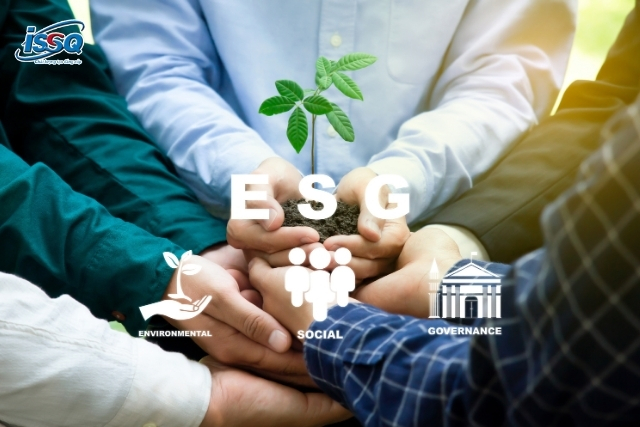
Using ISO 14001 as a foundation helps organizations establish ESG systems that are consistent, data-driven, and operationally practical. Key benefits include:
Easier integration into overall ESG frameworks
Enhanced credibility with investors, partners, and international markets
Optimized operational costs through efficient resource management
Greater capability to meet environmental requirements within global supply chains
Competitive advantage in sustainability reporting through reliable environmental data

Building ESG systems requires clear, consistent, and verifiable management foundations. ISO 14001 fully meets these requirements by providing a structured environmental management framework that enables organizations to control risks, utilize resources efficiently, and operate with greater transparency.
When properly implemented, ISO 14001 not only strengthens the Environmental component but also positively influences Social and Governance dimensions, helping organizations move closer to sustainable development goals.
Organizations seeking ISO 14001 certification for Environmental Management Systems may contact the Institute for Standard & Quality Development Studies (ISSQ) via hotline +84 981 851 111 or email vienchatluong@issq.org.vn | tcvn@issq.org.vn for procedural support.
Published date: 18 November 2025


