
INSTITUTE FOR STANDARD AND QUALITY DEVELOPMENT STUDIES


31/10/2025
In the context of rapid technological advancement, data has become the “most valuable asset” for every organization. However, along with digital transformation and technology adoption come increasingly sophisticated risks related to data loss, leakage, and cyber-attacks.
For this reason, the ISSQ Institute consistently recommends that organizations adopt ISO 27001 — a comprehensive data protection solution that strengthens trust and enhances information security in the digital era.
The Industry 4.0 digital transformation era offers tremendous growth opportunities for businesses, but it also brings significant risks of data breaches and information leakage. Each year, cyber-attacks, customer data theft, and internal data exposure incidents continue to pose serious threats to organizations of all sizes — from SMEs to multinational corporations.
A recent example highlights this reality. On September 10, 2025, the National Credit Information Center (CIC) was reportedly attacked by hackers. Initial verification results from the Vietnam Computer Emergency Response Team Coordination Center (VNCERT/CC) indicated signs of cybercriminal intrusion and personal data exfiltration. This incident serves as a strong warning about the importance of establishing proactive and professional security systems.
So how can organizations accelerate digital transformation while ensuring comprehensive information security? The answer lies in adopting ISO 27001 — Information Security Management System (ISMS).
ISO 27001 is an international standard jointly issued by the International Organization for Standardization (ISO) and the International Electrotechnical Commission (IEC). It provides requirements for establishing, implementing, maintaining, and continually improving an Information Security Management System (ISMS).
The standard specifies 93 information security controls, categorized into four main groups:
Organizational controls
People controls
Physical controls
Technological controls
Through these measures, ISO 27001 enables organizations to establish a comprehensive security governance framework that meets legal requirements, contractual obligations, and customer trust expectations.
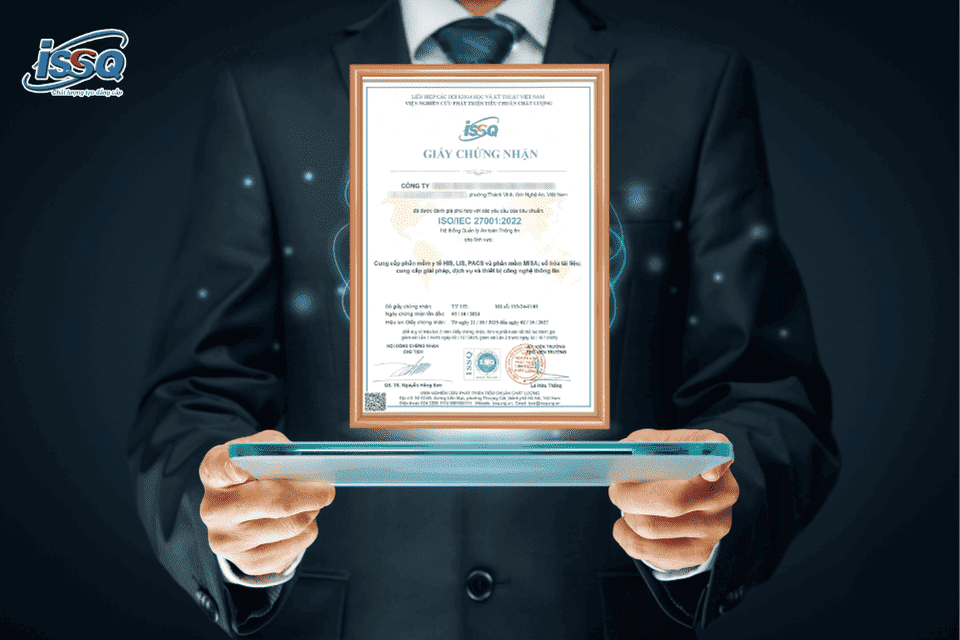
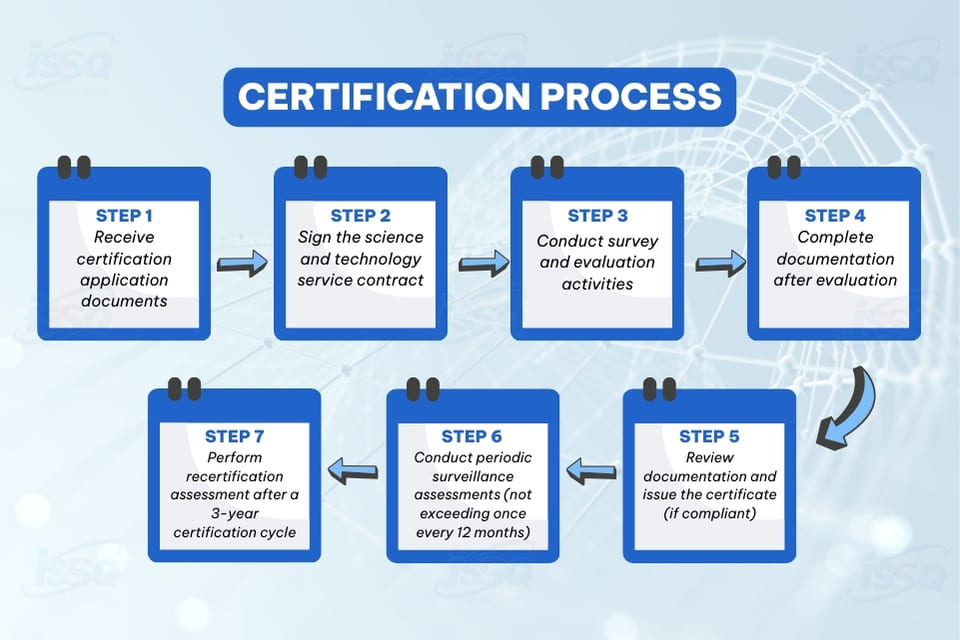
To build an internationally compliant ISMS, organizations must understand and follow the implementation roadmap aligned with the structure of ISO 27001:2022. Compliance with this process ensures operational transparency and effectiveness, while creating a solid foundation for certification assessment.
The ISO 27001 certification process typically includes:
Receiving certification application documents
Signing scientific and technological service contracts
Conducting surveys and assessments
Completing documentation after assessment
Reviewing dossiers and issuing certification (if compliant)
Performing surveillance audits at intervals not exceeding 12 months
Conducting recertification audits (certificate validity: 3 years)
Businesses are at the center of the data ecosystem, where massive volumes of information regarding customers, employees, finance, technology, research, and partners are stored, processed, and exchanged. In the digital age, enterprises are not only technology users but also primary custodians responsible for protecting information assets — a key factor determining organizational sustainability and reputation.
Implementing ISO 27001 is not merely about regulatory compliance; it is a proactive risk management strategy that demonstrates corporate responsibility in three core aspects:
Organizations identify risks, establish controls, define access rights, and protect critical data from threats.
Leadership must communicate awareness and embed security values across the workforce, making information security part of corporate culture rather than just technical regulations.
Maintaining an effective ISMS demonstrates transparency, reliability, and commitment to protecting stakeholders’ interests.
Thus, enterprises are not only beneficiaries of ISO 27001 adoption but also key drivers in building a secure, trustworthy, and sustainable data environment across the supply chain and the broader digital economy.
Implementing and achieving ISO 27001 certification provides practical value beyond information risk management — it also enhances credibility and competitiveness.
Key benefits include:
1. Comprehensive protection of critical data and information
ISMS helps control risks and prevent data breaches or losses from internal and external sources, ensuring confidentiality and integrity.
2. Strengthened trust and reputation
ISO 27001 certification signals strong commitment to information security, gaining recognition from international partners, regulators, and customers.
3. Improved governance and operational efficiency
Standardized processes and clear responsibilities reduce operational errors and enable faster, more accurate decision-making.
4. Compliance with legal and international requirements
ISO 27001 supports compliance with data protection regulations, reducing legal risks and maintaining global competitiveness.
5. Enabling safe and sustainable digital transformation
With robust data security foundations, organizations can confidently adopt digital solutions such as cloud computing and emerging technologies.
In the data-driven era, information security has become a new competitive capability. ISO 27001 is not merely a certificate but a comprehensive governance solution that enables organizations to operate securely, build trust, and achieve sustainable growth.
ISSQ Institute — a reputable organization in ISO certification and training — is ready to accompany enterprises throughout the process of assessment and certification of Information Security Management Systems in accordance with ISO 27001, helping enhance credibility and ensure data security in the digital age.
Organizations seeking ISO 27001 consultation and certification services may contact:
Publication date: October 28, 2025


