
INSTITUTE FOR STANDARD AND QUALITY DEVELOPMENT STUDIES


21/11/2025
The trend toward green consumption and the growing demand for safe food are placing increasing pressure on businesses across the entire supply chain. The market now requires not only high-quality products but also transparent production processes, effective risk control, and environmentally friendly operations.
In this context, ISO 22000 – Food Safety Management System has become an important solution that helps enterprises establish cleaner, more scientific, and sustainable operational foundations.
Let’s explore with the ISSQ Institute for Quality how ISO 22000 contributes to shaping green enterprises and delivering clean, safe products to consumers.
ISO 22000 is an international standard that specifies requirements for a Food Safety Management System (FSMS). The standard enables businesses to identify, control, and prevent hazards throughout the entire food supply chain — from raw materials and processing to storage and distribution.
ISO 22000 is developed based on a comprehensive management approach, integrating HACCP (Hazard Analysis and Critical Control Points) and the PDCA cycle (Plan – Do – Check – Act) to ensure systematic operation and continual improvement. Thanks to its structure being compatible with ISO 9001 and ISO 14001, businesses can easily integrate ISO 22000 into their existing management systems.
With its risk-based approach and requirements for information transparency, ISO 22000 provides a foundation for safe, clean, and reliable business operations that meet increasingly demanding market expectations.
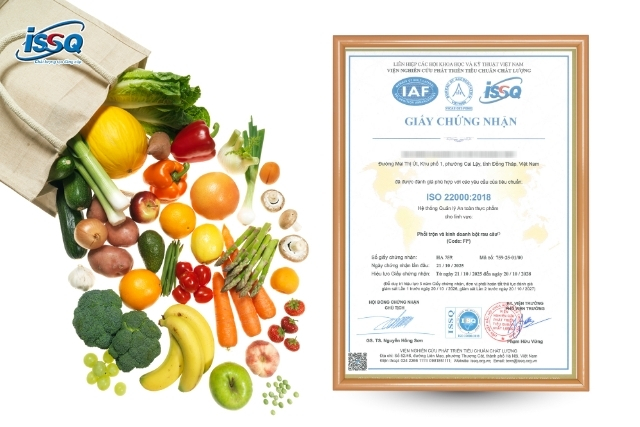
To be considered “clean,” a product requires not only quality raw materials but also strict and transparent control throughout the entire production process. ISO 22000 meets this requirement through a scientific and comprehensive food safety management system.
ISO 22000 requires businesses to evaluate and select suppliers based on safety criteria while identifying potential hazards associated with raw materials from the very beginning.
This proactive approach enables companies to eliminate risks at the earliest stage of the supply chain — a critical foundation for achieving clean final products.
ISO 22000 operates based on HACCP combined with the PDCA cycle, helping control all potential risk points during production.
The system ensures:
Reduced cross-contamination risks
Maintenance of mandatory hygiene conditions
A stable and safe production environment
As a result, products are manufactured under clean conditions, minimizing contamination risks and ensuring consistent quality.
Transparency is a key requirement for clean products. ISO 22000 mandates that businesses maintain complete records, production logs, and traceability information for each batch.
This allows companies to quickly identify raw material sources, production processes, and distribution points when necessary.
A clear traceability system builds customer trust and motivates businesses to maintain transparency throughout the entire supply chain.
Implementing ISO 22000 not only helps businesses control food safety more effectively but also provides a foundation for building brands aligned with green, clean, and transparent values.
Enhanced reputation and market access: Products manufactured under internationally recognized management systems help build trust among customers, partners, and regulatory authorities.
Standardized operations – reduced risks and costs: Scientific hazard control and clear processes help minimize production errors, reduce waste, and prevent food safety incidents.
Easier compliance with export market requirements and global supply chains: Many markets and major partners require or prioritize suppliers implementing ISO 22000, particularly in food, beverage, and catering sectors. Certification helps expand opportunities in global supply chains.
Safer products with lower risks: Strict hazard control systems provide greater assurance of food quality and safety.
Clear origin and transparent information: ISO 22000 requires traceability from raw materials to finished products, enabling customers to assess product reliability.
Greater trust in brands: Businesses implementing ISO 22000 — especially when exporting to demanding markets — are often perceived as responsible organizations committed to public health and safe products.
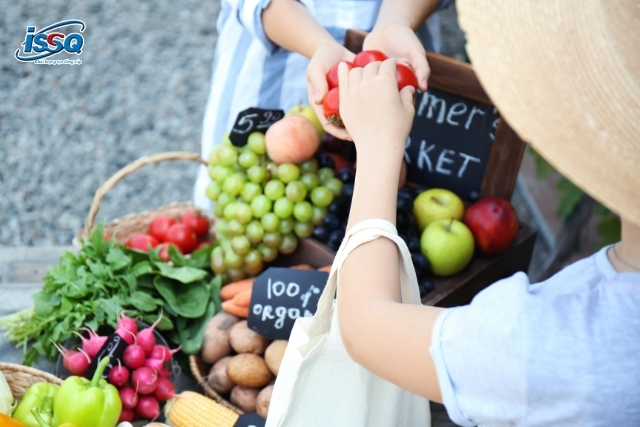
Moving toward green business models and providing clean products is no longer just a trend but an increasingly clear market requirement. ISO 22000 enables enterprises to build scientific, transparent, and stable food safety management systems, helping control risks, ensure product quality, and strengthen consumer trust.
With its risk-based approach and full supply chain traceability capability, ISO 22000 serves as a solid foundation for sustainable development and brand value enhancement through truly safe, clean, and reliable products.
Businesses seeking ISO 22000 Food Safety Management System certification assessment are encouraged to contact the ISSQ Institute for Quality via hotline (+84) 981851111 or email vienchatluong@issq.org.vn | tcvn@issq.org.vn for procedural support.
Published date: November 20, 2025


