
INSTITUTE FOR STANDARD AND QUALITY DEVELOPMENT STUDIES


Metal doors and windows are increasingly used in modern construction. However, how can businesses demonstrate product quality and build trust with partners and customers? This article helps enterprises understand the process and benefits of certification for metal doors and windows in accordance with TCVN 9366-2:2012.
In modern construction projects, metal doors and windows are increasingly widely used thanks to their high durability, aesthetic appearance, and ability to meet strict technical requirements. To demonstrate product quality and provide reliable assurance for partners, many enterprises choose to obtain certification of conformity with TCVN 9366-2:2012.
This article from the ISSQ Institute of Quality provides businesses with a clearer understanding of the certification process and benefits of certifying metal doors and windows in accordance with TCVN 9366-2:2012.
Metal doors and windows are products whose frames and/or panels are manufactured from metal materials (commonly aluminum or steel), typically combined with glass and synchronized accessories.
These products generally feature:
High durability and structural stability
Good load-bearing capacity
Corrosion resistance
Water tightness and air tightness
Sound insulation and thermal insulation
Compliance with safety and aesthetic requirements for buildings
Depending on design and functional requirements, metal doors and windows are classified by opening mechanism as follows:
Hinged type, fixed type, or horizontal-mounted type
Rotating type around vertical or horizontal axes
Vertical sliding, horizontal sliding, or combined sliding types (folding doors belong to horizontal sliding type)
Lever-operated type
Rolling type around a horizontal axis
Clear classification helps ensure that product evaluation, testing, and certification are conducted appropriately according to the technical characteristics of each door type.
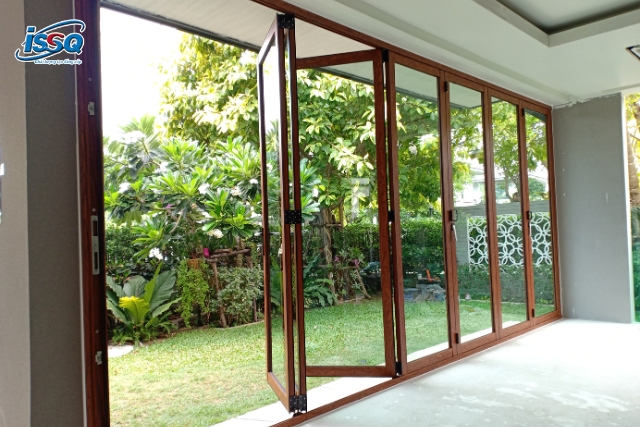
TCVN 9366-2:2012 is the Vietnamese National Standard titled
“Doors and Windows – Part 2: Metal Doors”.
This standard specifies technical requirements for metal doors and windows with fixed frames used in residential buildings and public buildings.
The standard includes requirements regarding:
Geometric dimensions and dimensional tolerances (squareness, distortion, bending)
Durability performance, including:
Impact resistance
Wind pressure resistance
Water tightness
Air permeability
Requirements for main materials (metal, glass)
Door accessories and surface structure
Applying TCVN 9366-2:2012 enables products to be evaluated systematically based on clear and consistent technical criteria.
Certification of conformity for metal doors and windows provides many practical benefits for manufacturers, processors, and suppliers of such products, not only in terms of technical aspects but also in terms of brand credibility and market competitiveness:
Demonstrates product conformity with national technical standards, thereby improving quality credibility
Enhances brand reputation and competitive advantage in bidding, quotations, and cooperation with investors or contractors
Supports enterprises in controlling and improving product quality through evaluation and testing activities
Facilitates market expansion, particularly in projects requiring transparent and well-documented technical dossiers
Contributes to improving safety, durability, and operational performance of products in real applications
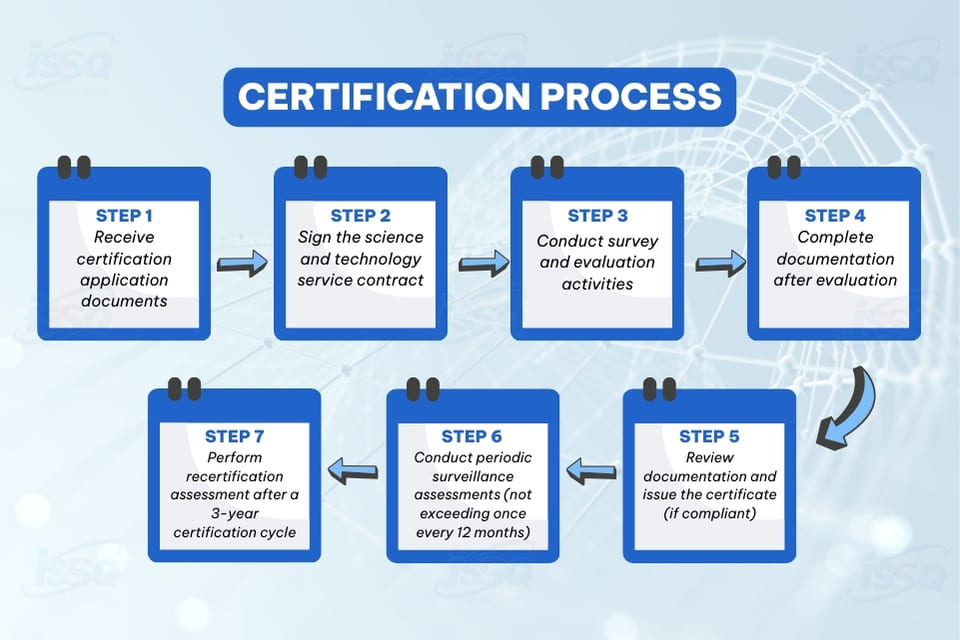
To ensure conformity assessment activities are conducted transparently, consistently, and in accordance with the technical requirements of the standard, the certification process generally includes the following steps:
Step 1: Receive certification application documents
Step 2: Sign the science and technology service contract
Step 3: Conduct inspection and assessment
Step 4: Complete documentation after assessment
Step 5: Review documentation and issue certification (if compliant)
Step 6: Conduct periodic surveillance assessment (not exceeding once every 12 months)
Step 7: Conduct recertification assessment after the 3-year certification cycle
Certification of conformity for metal doors and windows provides an important basis for enterprises to evaluate and demonstrate that their products meet technical requirements regarding dimensions, durability, materials, and safe usability.
Understanding the standard and implementing the certification process properly not only enhances product quality and brand credibility but also creates a solid foundation for enterprises to expand their markets and develop sustainably in the construction industry.
If your company requires certification services for metal doors and windows, please contact the ISSQ Institute of Quality:
Our experts will support your company with certification procedures and technical guidance.
Published date: December 15, 2025


