
INSTITUTE FOR STANDARD AND QUALITY DEVELOPMENT STUDIES


Technical Regulation QCVN 4:2009/BKHCN is the national technical regulation on safety for electrical and electronic equipment, stipulating safety requirements and management requirements for electrical and electronic equipment specified in the List provided in the Appendix of this Technical Regulation.
Technical Regulation QCVN 4:2009/BKHCN applies to organizations and individuals manufacturing, importing, distributing, and retailing electrical and electronic equipment specified in the Appendix of this Technical Regulation, state management agencies, and other related organizations and individuals.
Microwave ovens are common household electrical appliances used in many families, food service establishments, and industrial kitchens. Due to their high-power operation, heat generation, and microwave emission, these products must undergo safety assessments before being placed on the market.
Implementing microwave oven conformity certification according to QCVN 4 provides businesses with a technical basis to ensure product compliance with current national technical regulations.
A microwave oven is a kitchen appliance that uses microwaves—a form of high-frequency electromagnetic waves—to heat, cook, or defrost food in a short period. The heating mechanism is based on causing water, fat, and sugar molecules inside the food to vibrate rapidly, creating friction heat that cooks the food quickly from the inside out.
The operation of a microwave oven follows these basic steps:
Microwave Generation: The magnetron emits high-frequency microwaves.
Wave Distribution: Microwaves are guided into the oven cavity and reflected continuously off metal surfaces.
Interaction with Food: Water, fat, and sugar molecules absorb the wave energy, vibrate, and collide, generating heat to cook the food.
Heating: Quickly warms food while minimizing dehydration and maintaining moisture.
Defrosting: Thaws frozen food rapidly, making meal prep more convenient.
Cooking: Supports simple recipes or cooks food efficiently.
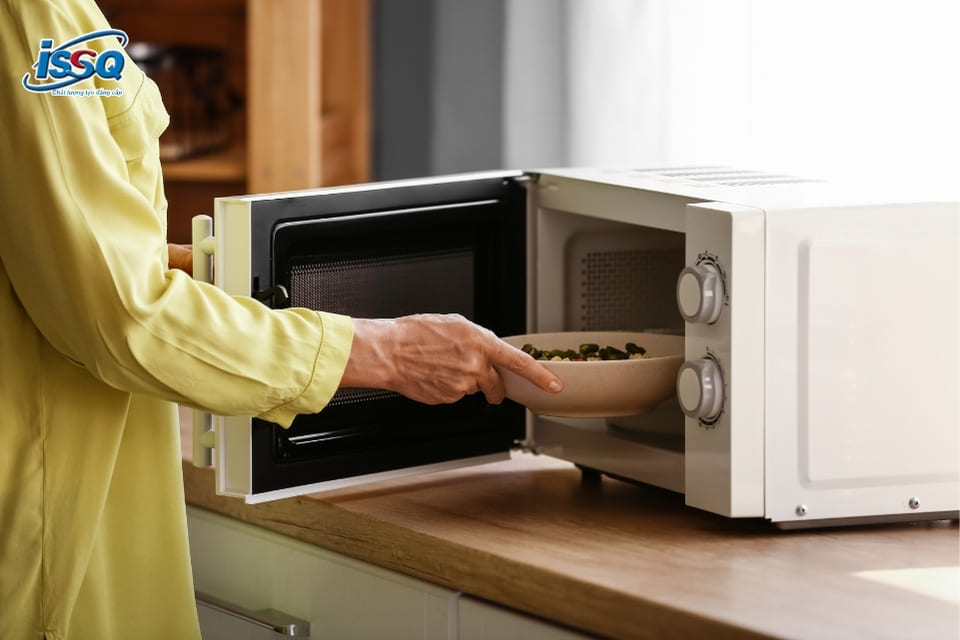
QCVN 4 is the National Technical Regulation on the safety of electrical and electronic equipment. It sets forth safety and management requirements for devices listed in its Appendix. This list may be modified or supplemented by the Minister of Science and Technology.
QCVN 4 dictates that microwave ovens must comply with TCVN 5699-2-25:2007 (IEC 60335-2-25:2005): Household and similar electrical appliances – Safety – Part 2-25: Particular requirements for microwave ovens, including combination microwave ovens.
Definition: According to TCVN 5699-2-25:2007, a microwave oven is an appliance using electromagnetic energy in one or more ISM frequency bands between 300 MHz and 30 GHz to heat food and beverages in a cavity.
Scope of TCVN 5699-2-25:2007:
Applies to household microwave ovens with a rated voltage not exceeding 250 V.
Includes combination microwave ovens (refer to Annex AA).
Does NOT apply to: * Commercial microwave ovens (IEC 60335-2-90).
Industrial microwave heating equipment (IEC 60519-6).
Equipment designed for special conditions (corrosive or explosive atmospheres).

Obtaining QCVN 4 certification offers several practical advantages for manufacturers, importers, and distributors:
State Management Compliance: Acts as the legal basis for products to circulate freely on the market.
Safety Risk Control: Testing identifies and mitigates risks such as electric shock, overheating, and microwave leakage.
Legal Foundation for Business: Facilitates technical dossiers for self-declaration and market surveillance inspections.
Enhanced Brand Reputation: Certified products signal safety compliance, increasing trust among partners and consumers.
Long-term Quality Management: Helps businesses review and improve design and production processes systematically.
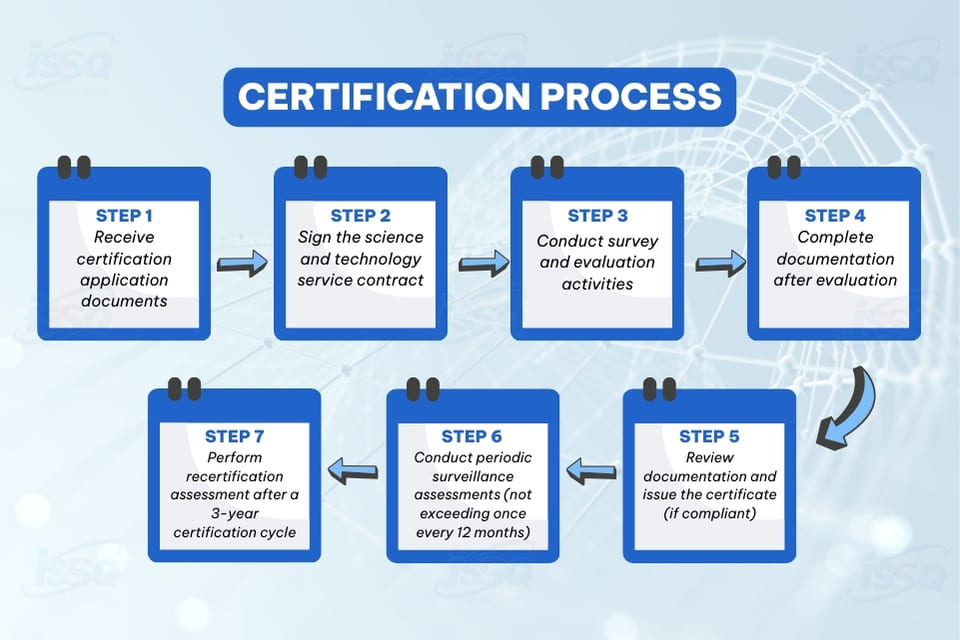
To evaluate compliance, businesses follow these steps:
Step 1: Receive the certification registration application.
Step 2: Sign the Science and Technology service contract.
Step 3: Conduct surveys and technical assessments.
Step 4: Finalize the post-assessment dossier.
Step 5: Appraise the dossier and issue the certificate (if compliant).
Step 6: Perform periodic surveillance audits (at least once every 12 months).
Step 7: Recertification assessment after the 3-year cycle.
In a market where microwave ovens are increasingly indispensable, proactive certification not only minimizes usage risks but also enhances a company's competitive edge.
Contact Us: If your company requires microwave oven conformity certification according to QCVN 4, please contact the ISSQ Institute of Quality:
Hotline: 0981851111
Email: vienchatluong@issq.org.vn | tcvn@issq.org.vn
Post Date: January 12, 2026


