
INSTITUTE FOR STANDARD AND QUALITY DEVELOPMENT STUDIES


17/04/2026
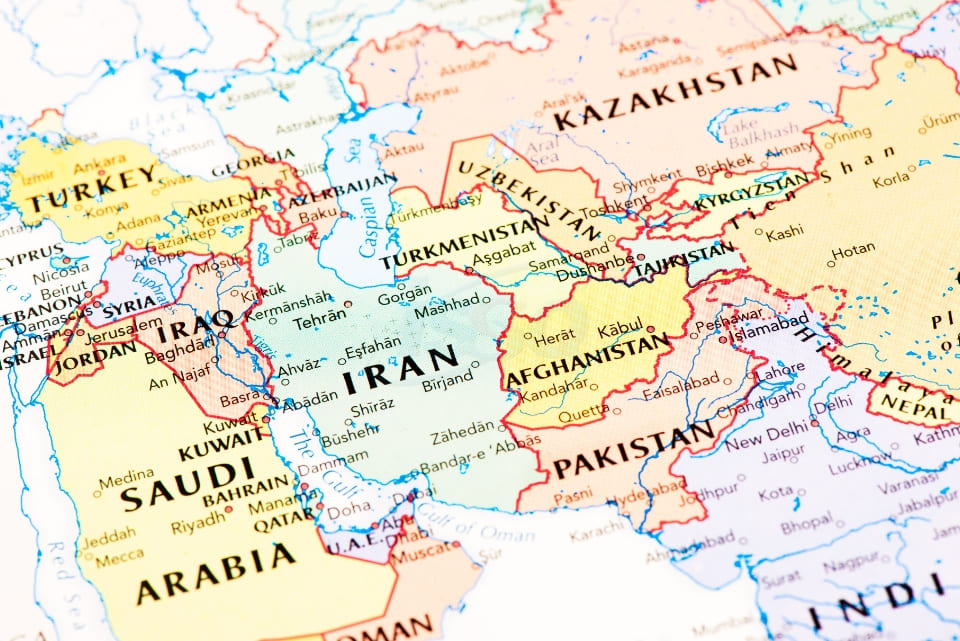
The conflict in the Middle East is creating significant impacts on global supply chains and logistics activities. From extended transportation times and rising costs to the risk of supply shortages, many businesses, including those in Vietnam, are under pressure to maintain stable operations amid uncertainty.
In the face of these unpredictable risks, proactively building management systems to respond and adapt is no longer a long-term option, but a practical necessity in business management.
Join ISSQ Quality Institute in exploring solutions that help businesses minimize operational disruptions and maintain logistics flow in the article below.
Conflict in the Middle East is not only regional in nature but also creates widespread impacts on global economic activities. For businesses, especially those involved in manufacturing, import-export, and logistics, these effects are often reflected in the following aspects:
The Middle East is home to many strategic transport routes, including the Strait of Hormuz, through which a significant portion of global oil and goods passes. When conflicts occur, shipping routes may need to be changed to ensure safety, resulting in longer delivery times than planned, unstable schedules, and reduced predictability.
This makes it difficult for businesses to control delivery progress, especially for international orders.
Geopolitical instability often leads to changes in energy prices, particularly oil prices. As a result:
These factors directly increase input costs and affect business profit margins.
As conflicts escalate, suppliers in affected regions may reduce or suspend production, while imported raw materials may be delayed or fail to arrive on time. Businesses that depend on a single supply source can easily become vulnerable.
Supply chain disruptions not only affect production but also impact timelines and customer commitments.
External disruptions can quickly affect internal business activities:
In many cases, businesses not only face financial losses but also damage to their reputation and partner relationships. Disruptions in logistics and supply chains are direct causes of operational interruptions. This is also why risk identification and response planning have become critical factors in the current context.
In periods of instability such as the Middle East conflict, many businesses may not encounter problems during normal operations, but weaknesses become apparent when risks emerge. Common limitations include:
Most businesses have not developed scenarios for disruptions:
When a crisis occurs, businesses often react passively and respond case by case rather than following a prepared plan.
Many businesses maintain cost-optimized operations under stable conditions, but hidden risks remain:
When one link in the chain fails, the entire system can be affected.
External risks such as war and geopolitical instability are often excluded from risk assessments:
This makes it difficult for businesses to anticipate and prepare for adverse situations.
Even when risks are identified, many businesses still struggle with implementation:
As a result, crisis response becomes slow and inconsistent.
Most businesses do not lack operational capacity; rather, they lack management systems that help maintain operations under unusual conditions. These gaps make businesses more vulnerable during crises and highlight the need for systematic and proactive management tools.

ISO 22301 – Business Continuity Management is a standard for business continuity management systems that provides a framework for businesses to proactively prepare, respond, and recover from disruptions. In situations such as the Middle East conflict, this standard helps businesses maintain operations instead of experiencing complete shutdowns.
ISO 22301 focuses on building business resilience and recovery capability through:
When disruptions occur, ISO 22301 helps businesses:
ISO 28000 – Supply Chain Security Management is a standard for supply chain security management systems that helps businesses identify, control, and reduce risks throughout the transportation, storage, and distribution process. In the context of geopolitical instability, this standard supports businesses in maintaining stable goods flow and minimizing logistics disruptions.
ISO 28000 focuses on controlling risks throughout the supply chain through:
When conflicts affect international logistics, ISO 28000 helps businesses:
Applying ISO 22301 and ISO 28000 together helps businesses build stable operational capability in uncertain conditions instead of merely reacting after incidents occur. The core value lies not in each standard separately, but in their ability to jointly control both internal operations and external supply chains.
When crises occur, businesses can continue critical activities because priorities and alternatives have already been identified. This helps avoid a complete shutdown due to the failure of a single link.
Instead of depending on one transportation route or supplier, businesses gain the flexibility to adapt to changes. Goods flow remains more stable, even when international logistics conditions change.
Having contingency plans in place helps businesses reduce costs caused by delayed shipments, production interruptions, or sudden plan changes. At the same time, resources can be allocated more effectively during emergencies.
With clear risk assessment systems and action plans, businesses can make decisions faster and with greater confidence. This is especially important during crises, when response time is critical.
The ability to maintain schedules and stable operations helps businesses strengthen their credibility in the market. This is an important factor in retaining customers and gaining advantages in large supply chains.
Beyond responding to crises, ISO 22301 and ISO 28000 help businesses build management systems that can adapt over the long term. In a business environment full of risks, this is an important foundation for maintaining and expanding operations sustainably.
Applying ISO 22301 and ISO 28000 not only helps businesses respond to short-term disruptions but also builds a stable and flexible operational foundation for the long term, especially when risks are becoming increasingly unpredictable.

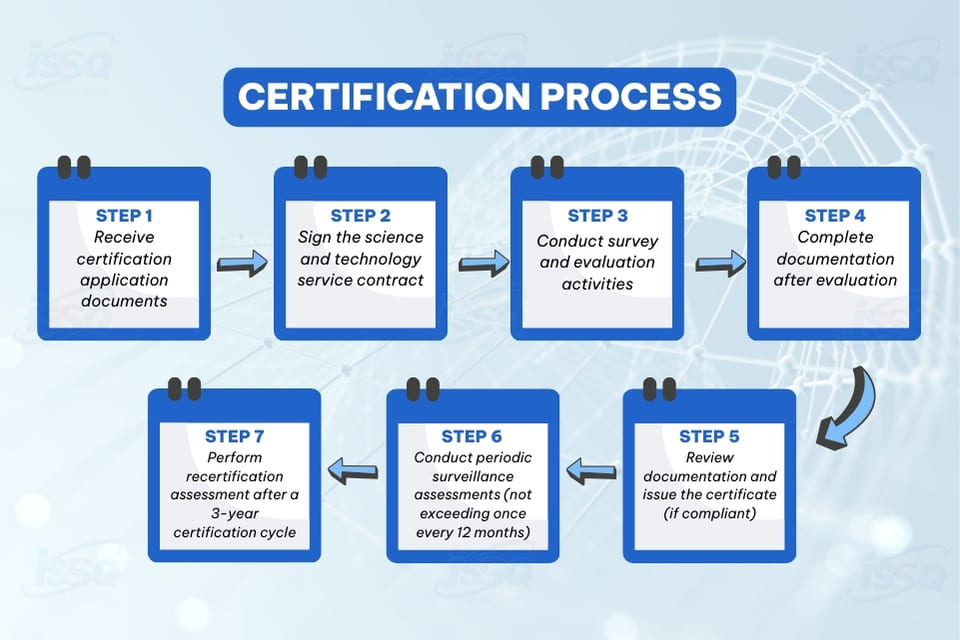
To obtain ISO 22301 and ISO 28000 certification, businesses will go through the following process:
Step 1: Receive certification registration documents
Step 2: Sign the science and technology service contract
Step 3: Conduct surveys and assessments
Step 4: Complete documentation after assessment
Step 5: Review documents and issue certificates (if qualified)
Step 6: Conduct surveillance assessments at least once every 12 months
Step 7: Conduct recertification assessment after the 3-year certification cycle
In the context of geopolitical instability such as the Middle East conflict, the risk of disruption is no longer hypothetical but has become part of the business environment. Businesses cannot control external factors, but they can proactively build their capacity to respond and adapt.
Applying ISO 22301 and ISO 28000 helps businesses gradually build management systems capable of maintaining operations and protecting supply chains against uncertainty. This is not only a solution for current crises but also a foundation for improving stability and sustainable development in the long term.
If your company needs assessment and certification services for ISO 22301 and ISO 28000, please contact ISSQ Quality Institute via hotline: +84 981851111 or email: vienchatluong@issq.org.vn | tcvn@issq.org.vn for support.
Published Date: 17/04/2026


