
INSTITUTE FOR STANDARD AND QUALITY DEVELOPMENT STUDIES


11/11/2025
In the context of deep globalization, values related to human rights, labor conditions, and business ethics are becoming key indicators for assessing a company’s sustainable development and reputation.
Major markets such as the European Union (EU), the United States, Japan, and Canada have set increasingly stringent requirements not only on product quality but also on production processes, working conditions, and employee welfare — factors that clearly reflect corporate social responsibility.
For Vietnamese enterprises, especially in labor-intensive industries such as textiles and garments, footwear, wood processing, and electronics, meeting international social responsibility standards not only helps maintain export markets but also creates opportunities to access global partners with high expectations regarding employee rights and benefits.
In this context, the SA 8000 standard – Social Accountability Management System – was developed to support Vietnamese enterprises in entering international markets, demonstrating compliance with global labor and human rights standards, showing commitment to employee protection, and enhancing reputation and competitiveness within international supply chains.
Beyond being merely a certification, SA 8000 serves as a “bridge” enabling Vietnamese enterprises to access, integrate, and strengthen their position in responsible global supply chains. Through the implementation of this standard, organizations can improve their image among international partners, investors, and consumers while fostering a sustainable development culture that places people at the center.
SA 8000 (Social Accountability 8000) is an international social responsibility standard focusing on protecting workers’ rights and ensuring safe and fair working conditions. It is issued by Social Accountability International (SAI). The standard provides a framework for organizations to establish, maintain, and demonstrate proper implementation of human rights principles and fair labor practices throughout their production and business activities.
SA 8000 is built upon three main foundations:
National labor laws in countries where the enterprise operates;
Conventions of the International Labour Organization (ILO), including core provisions on freedom of association, prohibition of child labor, gender equality, and safe working conditions;
The Universal Declaration of Human Rights and other international human rights conventions, ensuring that all workers are treated fairly, with dignity and opportunities for development.
The objective of SA 8000 is to protect workers’ rights, ensure a safe and respectful working environment, and encourage responsible and transparent management practices. By adopting SA 8000, enterprises not only comply with international ethical standards but also demonstrate a strong commitment to sustainable development and human-centered business values.
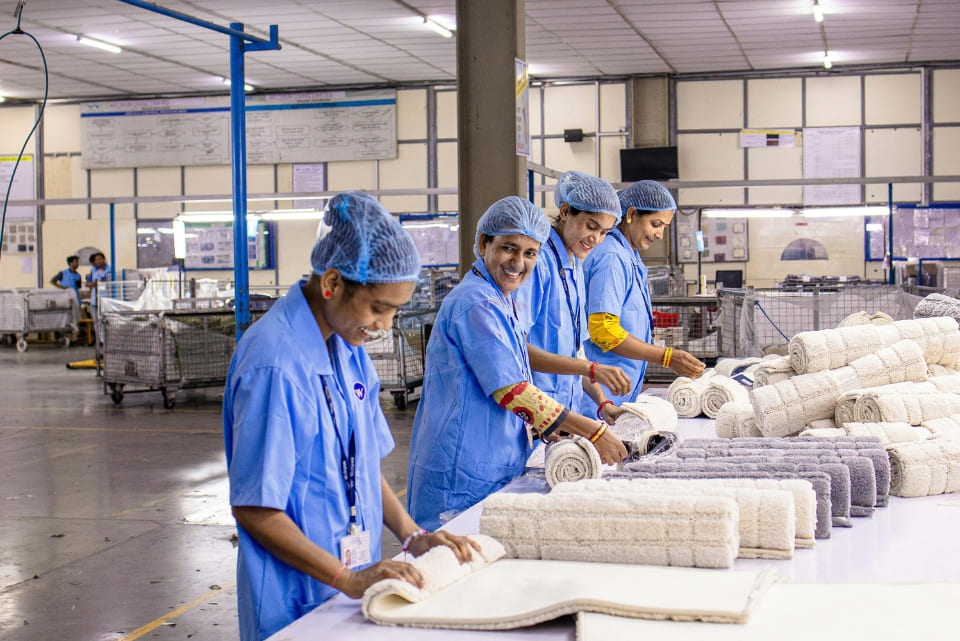
According to the SA 8000 standard, certified organizations must establish, maintain, and demonstrate policies, procedures, and working conditions that comply with national laws, ILO conventions, and the Universal Declaration of Human Rights. This ensures that all activities — from manufacturing and sourcing to subcontracting — align with principles of labor, safety, and professional ethics.
As international brands and retailers increasingly strengthen social responsibility oversight in supply chains, SA 8000 is recognized as a reliable management system enabling enterprises to demonstrate compliance with global labor standards. Vietnamese companies achieving SA 8000 certification gain advantages in participating in sustainability-oriented supply chains and are highly regarded during partner selection, evaluation, or long-term cooperation processes.
In practice, in industries such as textiles, footwear, electronics, and wood processing, SA 8000 has become a “passport” helping enterprises enhance credibility and meet expectations from partners in the EU, the United States, Japan, and other major export markets where business ethics and labor conditions are highly prioritized.
SA 8000 certification provides objective and verifiable evidence that an enterprise complies with labor, human rights, and ethical business standards. The standard requires organizations to ensure:
No use of child labor or forced labor;
Respect for freedom of association and collective bargaining;
Non-discrimination;
Provision of living wages and transparent remuneration;
Safe, hygienic, and humane working environments.
As a result, enterprises can strengthen trust with international partners, customers, and investors. In the global shift toward sustainable business models, SA 8000 certification also helps improve ESG (Environmental – Social – Governance) performance — an increasingly important factor for multinational corporations and investment funds when selecting partners or allocating capital.

SA 8000 is not only a labor ethics standard but also a strategic tool enabling Vietnamese enterprises to demonstrate credibility, management capability, and social responsibility to international partners. Achieving SA 8000 certification shows that a company prioritizes people — the core of sustainable development — alongside profitability.
As the world moves toward fair trade, responsible production, and transparent supply chains, SA 8000 becomes a vital “bridge” helping Vietnamese enterprises expand international cooperation opportunities and meet global requirements on labor, safety, and human rights.

Implementing SA 8000 is the key to integration, enabling enterprises not only to access demanding markets such as the EU, the United States, and Japan but also to build a long-term development foundation based on trust and human values. This enhances competitiveness, attracts investment, strengthens relationships with international partners, and contributes to the broader goal of a sustainable and socially responsible Vietnamese economy.
Organizations interested in SA 8000 certification assessment and implementation may contact ISSQ Institute of Standards and Quality Development Studies via hotline: (+84) 981 851 111 or email: vienchatluong@issq.org.vn | tcvn@issq.org.vn for procedural support.
Published date: November 7, 2025


